Alan Turing
Considered in many ways to be the father of modern computing, Turing was a pioneering mathematician and computer scientist who introduced the ‘Turing machine’, formalising the concepts of algorithms and computation. His work as part of the code breaking team at Bletchley Park played a crucial role in deciphering German communications and saving countless allied lives.
In 1952, Turing was charged with ‘gross indecency’ under Section 11 of the Criminal Law Amendment Act 1885, and forced to choose between imprisonment and probation under the condition that he undergo ‘chemical castration’. He chose probation, was stripped of his security clearance, and barred from working with GCHQ.
Turing died of cyanide poisoning in 1954, and his death was deemed a suicide. Though this theory has come under considerable doubt, there is no question that Turing was mistreated by the very state he had admirably served. In recognition of this, the UK government passed the ‘Alan Turing law’ in 2017 to retrospectively pardon those who had been persecuted under homophobic laws.
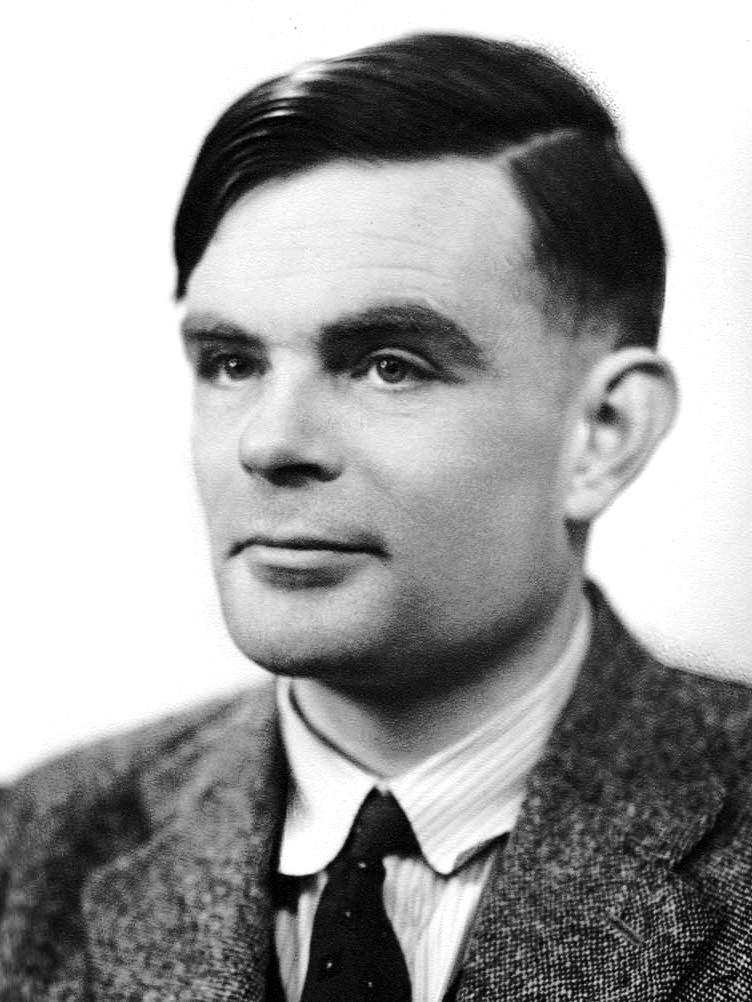
Photo credit, available under public domain
.jpg)